
Equipment Compliance In Australia
What homeowners, business owners and facility managers need to know before the electrician arrives
It’s the problem nobody warns you about…
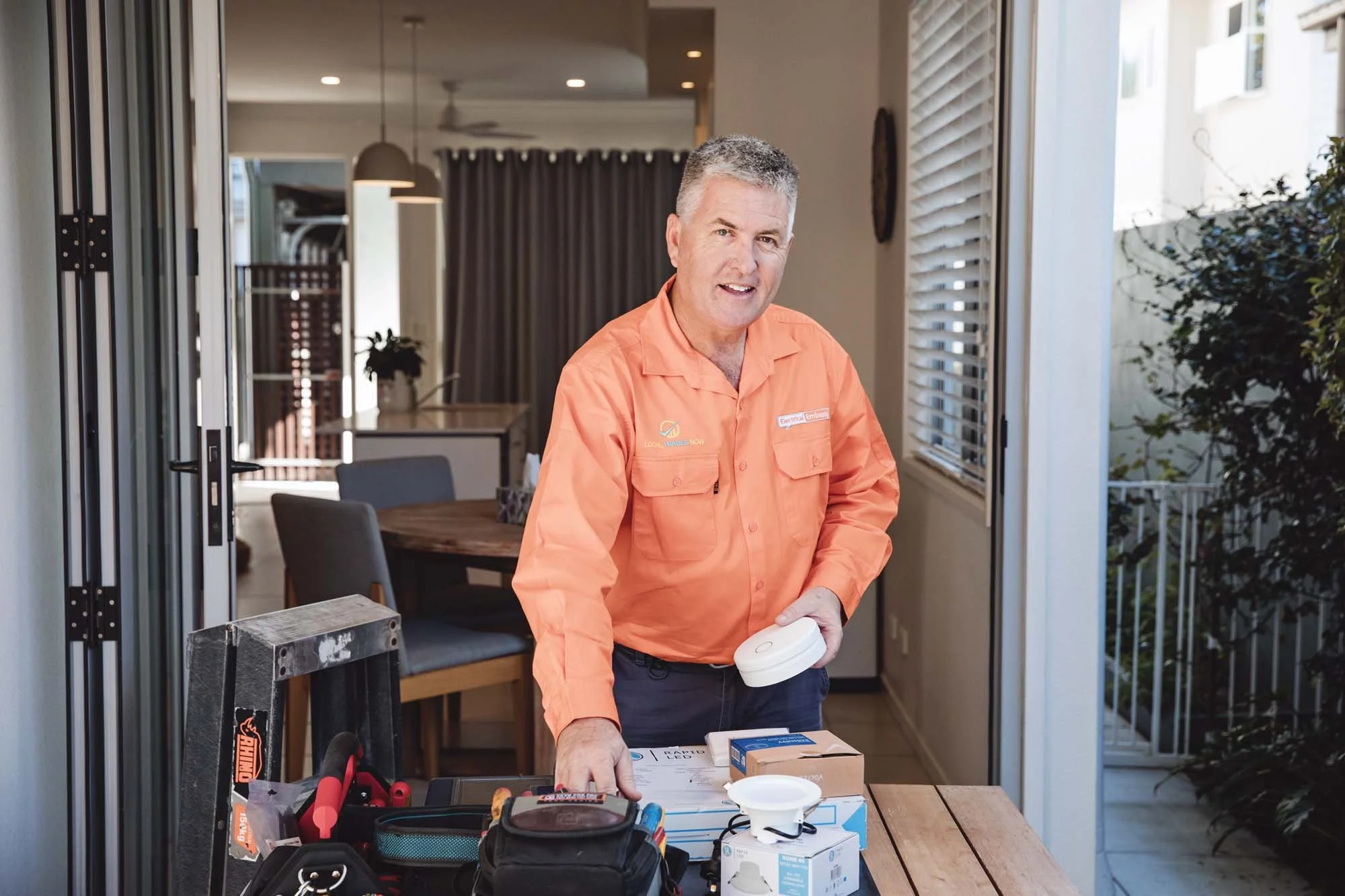
You bought a light fitting on eBay. Or you shipped a conveyor system from China. Or you ordered a laser cutter online and it arrived in a container. You called an electrician to connect it. Perfectly reasonable, that's what electricians are for…
Except here's what nobody told you: the moment it's connected, you enter a liability chain that doesn't resolve cleanly if something goes wrong.
In Australia, the rules around electrical equipment compliance are split across multiple government agencies, buried in legislation most people never read, and enforced inconsistently, until there's an incident. At that point, insurers, lawyers, and safety regulators all go looking for the weakest link.
This page exists because we believe you deserve to understand the system before that happens. Not so we can avoid doing the job, we connect client-supplied electrical equipment every day. But we need the right information from you first, and you need to understand why.
The compliance framework: what it is and why it's confusing
The RCM mark
The Regulatory Compliance Mark (RCM), a tick inside a circle, is the primary compliance symbol for electrical equipment sold in Australia. It replaced the older C-Tick and A-Tick marks in 2016.
Here's the part most people don't know: the RCM is jointly owned by two entirely separate government bodies:
EESS (Electrical Equipment Safety System), confirms the product meets Australian electrical safety standards. Managed by state and territory electrical safety regulators.
ACMA (Australian Communications and Media Authority), confirms the product meets electromagnetic compatibility and telecommunications standards. See ACMA RCM information.
A product can carry the RCM for ACMA compliance only, having never been assessed for electrical safety. The same mark. Two different meanings. Seeing the RCM on a product does not automatically confirm it is electrically safe.
The EESS
The EESS is the national framework for household electrical equipment safety. In-scope equipment is anything operating between 50V AC and 1000V AC that is designed or marketed as suitable for household, personal, or similar use. Products are classified into three risk levels, Level 1 (low risk), Level 2 (medium risk), and Level 3 (high risk), with increasing registration and certification requirements at each level. You can search registered equipment at eess.gov.au.
The dangerous gap: Industrial and commercial equipment
Commercial and industrial equipment used exclusively in those settings is outside the EESS entirely. Laser cutters, conveyor systems, CNC machines, commercial ovens, industrial presses, food processing equipment, none of these require EESS registration or an RCM mark.
But they are not in a compliance-free zone. They must meet AS/NZS 3820: Essential Safety Requirements for Electrical Equipment, plus any product-specific Australian Standard that applies. The supplier must hold evidence of compliance, and in practice, for equipment arriving directly from an overseas manufacturer with no Australian importer in the chain, that evidence often does not exist. This is the most dangerous gap in the system.
Information for
Residential Clients
The most common residential job we see is imported light fittings, bought on eBay or an overseas site for a fraction of the local price, arriving with no RCM mark, a fraudulent mark, or no Australian-registered supplier in the chain.
If that fitting starts a fire, your home insurer will investigate. A missing or fraudulent compliance mark is a documented basis to dispute your claim. You're not automatically covered because an electrician installed it.
The one-sentence test: was this product sold by an Australian retailer or an Australian-registered importer? If yes, we can verify it in under two minutes. If no, it needs checking before we connect it.
The same test applies to overseas chandeliers, second-hand appliances from online marketplaces, equipment brought back from travel, hard-wired kitchen gear, bathroom heaters, and ceiling fans. If it came from outside an Australian supply chain, check it.

Information for
Commercial Clients
Commercial clients are increasingly buying through online marketplaces, direct import channels, and overseas suppliers. The cost savings are real. So is the compliance exposure, and it's growing.
CE and UL marks are not Australian compliance.
We say this clearly because it's the most common misconception in commercial purchasing:
A CE mark (European Union) is not Australian compliance. A UL mark (United States) is not Australian compliance. No overseas compliance mark is Australian compliance.
These marks show compliance with the legal frameworks of their own jurisdictions. Australian regulators don't accept them as evidence of compliance with Australian Standards. If your supplier says 'it meets Australian standards', ask for the documentation. A claim is not evidence.
Information for
Industrial Clients
The container problem, explained fully
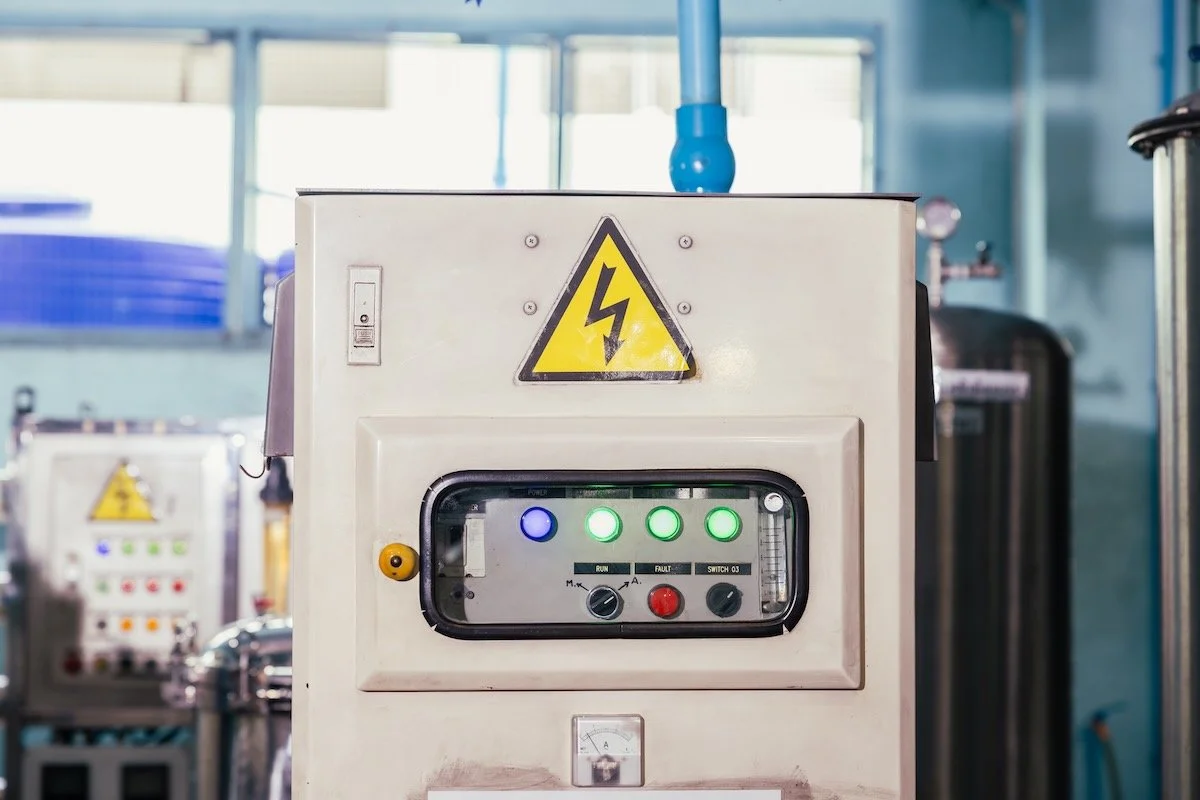
More industrial businesses are buying machinery, conveyors, ovens, laser cutters, presses, and production equipment straight from overseas manufacturers, mostly China, and shipping it to Australia in containers. What usually arrives: a CE mark, a manual in the original language, wiring that may or may not be rated for Australian mains, control systems that may or may not meet Australian safety standards, and no Australian compliance documentation at all.
Electrical safety: AS/NZS 3820
The equipment must comply with AS/NZS 3820, plus the product-specific Australian Standard for that machinery type. The supplier or importer must hold documentation proving it. There's no register to check and no mark to look for. Without documentation, there's no compliance trail.
Our role is to connect the equipment to AS/NZS 3000 (the Wiring Rules). That's the scope of our work as licensed electrical contractors. We don't certify the equipment itself. But we have a duty to take reasonable steps to confirm it's safe before connecting it, and we'll raise it if something is obviously wrong.
Work health and safety: the machinery safety obligations you may not know about
Under Queensland's Work Health and Safety Act, a Person Conducting a Business or Undertaking (PCBU), the business owner or facility manager, has specific obligations for any plant or machinery in their workplace. Those obligations don't disappear because the machine was bought overseas. See WorkSafe Queensland machinery and plant safety.
AS/NZS 4024: Safety of Machinery is the cornerstone standard. It covers:
Guarding, physical barriers preventing access to dangerous moving parts during operation.
Emergency stops, accessible, clearly marked, able to halt the machine immediately, independent of normal controls.
Interlocks, safety switches preventing operation when guards are open or removed.
Lockout/tagout provisions, safe isolation and de-energisation for maintenance.
Control systems, designed to fail to a safe state.
Risk assessment documentation, completed before the machine enters production.
If a machine arrives without these features, the obligation to fix it sits with the PCBU. Under Queensland's ESOLA Act 2024, industrial manslaughter provisions extend to all persons owed a safety duty, not just workers. This is not theoretical.
What we check before we connect any client-supplied equipment:
We don't provide a compliance checking or inspection service. If we supplied it, we stand behind it. If you supplied it, you stand behind it. There is no middle ground.
When we supply equipment, it comes from suppliers we've spent decades evaluating. We pick reputable manufacturers and supply chains on purpose, because non-compliance costs everyone, and we won't put our clients, our licence, or our business near it. Even within established supply chains, failure rates can climb as product cycles speed up and new equipment floods the market, which is why supplier evaluation is ongoing work for us, not a one-time decision. That standard of care applies to what we source. It can't transfer to what we didn't.
When you supply the equipment, the compliance chain from manufacturer to importer to you is entirely yours. We connect it to the building's wiring under AS/NZS 3000. That's where our scope begins and ends.
Industrial machinery can be extraordinarily complex, with processes, control systems, and design intent that can't be judged by a visual inspection, or at all without days of investigation by specialists in that equipment type. We make no assessment of that and offer no opinion on it. If something is obviously unsafe, we'll stop and tell you. Beyond that, compliance is yours to establish before we arrive, not ours to discover on site.
Our equipment compliance declaration & FAQs
For any job involving client-supplied equipment, we send an Equipment Compliance Declaration before we attend site. It takes two minutes and can be signed digitally. It sets out that our scope is the electrical installation work, and that responsibility for the equipment's compliance sits with whoever supplied it.
If this form isn't signed, we don't proceed.
Before any work starts, we require the client to sign and accept full responsibility for any client-supplied equipment and its compliance with all applicable Australian Standards. We reserve the right to decline or stop any work at any time if we see obvious safety or compliance issues with client-supplied equipment, regardless of any third-party documentation, certificates, or advice the client has obtained. Our on-site assessment is final. No certificate overrides what our licensed electricians see in the field.
FAQs
-
No. A visual inspection can't assess internal wiring quality, insulation ratings, or control system design. Compliance needs testing and documentation, not a look.
-
No. A claim is not evidence. We need a test report from an accredited laboratory, or a Certificate of Conformity to the relevant Australian Standard.
-
Not for compliance or insurance. What matters is whether the equipment was compliant when it was installed.
-
Same rules apply. There's no temporary connection exemption under Queensland electrical safety legislation
-
No. CE marking is European compliance. Australian regulators don't accept it as evidence of compliance with Australian Standards.
-
No. Our responsibility is the electrical installation, the connection to the building's wiring under AS/NZS 3000. We're not machinery safety engineers. Equipment compliance sits with the designer, manufacturer, importer, and the PCBU operating the machine.
In summary
The current system places obligations on installing electricians that, in our view, shift regulatory responsibility from government agencies onto tradespeople. The legislation makes the last person holding the cable partly responsible for decisions made weeks, months, or years earlier in a supply chain they had no part in.
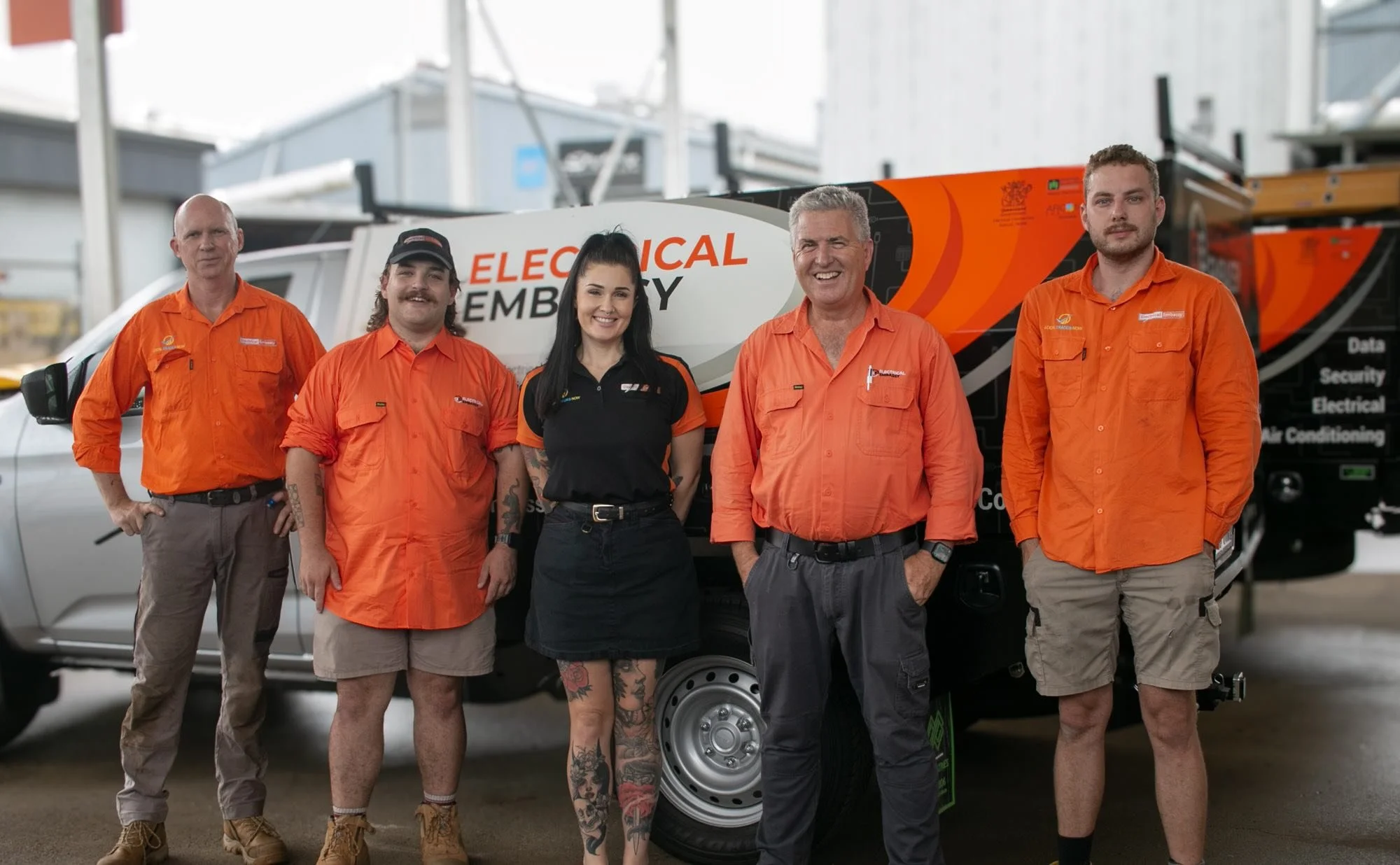
We're not the compliance police. We're not an unpaid inspection service for Border Force, the ESO, WorkSafe, or any other agency. We're a licensed electrical contracting business with 40 years of experience and a duty of care to our clients, our staff, and the public.
What we'll do is our job, correctly, with documentation, a clear scope of work, and honest communication about where our responsibility starts and stops. If you've got a piece of equipment you're not sure about, call us before it arrives on site.
Electrical Embassy Pty Ltd Yeerongpilly, Brisbane | Servicing Southeast Queensland Queensland Electrical Contractor Licence No. 78568 | ArcTick Licence AU45846 | Master Electricians Australia Member
This article is provided for general educational purposes and does not constitute legal or WHS advice. For specific compliance questions, contact us directly or consult a suitably qualified person.